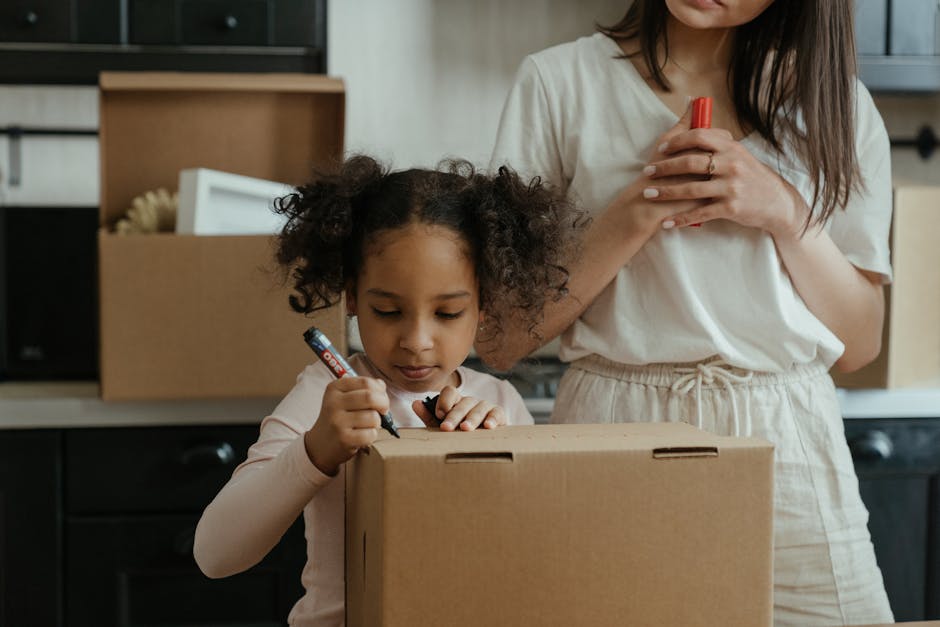
Moving With Kids Around Sutton? Stress-Minimising Tips

Moving house is never a tiny job, and moving with children can turn a busy day into a full-on emotional marathon. If you are planning a family move in Sutton, the good news is that a calmer move is absolutely possible. With the right planning, a few honest expectations, and some child-friendly routines, you can keep the day organised without feeling like you are chasing ten plates at once.
This guide on Moving With Kids Around Sutton? Stress-Minimising Tips breaks down what actually helps: how to prepare children, what to pack first, how to keep the day steady, and when a bit of professional support makes all the difference. There is no magic wand here, to be fair, but there is a very workable method.
If you are juggling school runs, bedtime routines, boxes everywhere, and a child who has suddenly become very concerned about where their favourite mug will go, you are in the right place.
Why Moving With Kids Around Sutton? Stress-Minimising Tips Matters
Children do not experience moving in the same way adults do. We tend to focus on keys, contracts, parking, inventory, and the hundred little moving-day problems that arrive uninvited. Kids, meanwhile, are thinking about their room, their toys, their friends, their school route, and whether the new place will smell "weird". That last one matters more than it sounds.
A family move in Sutton can be especially sensitive because children often have fixed routines around school, clubs, parks, and familiar streets. A smooth move is not just about getting the sofa through the front door. It is about helping your child keep a sense of security while everything around them shifts.
Why does that matter so much? Because stressed children often become more distracted, clingy, tired, or tearful. Adults feel it too. One upset morning can set the tone for the whole day. And once everyone is overtired, even tiny problems feel huge. A missing water bottle becomes a crisis. A delayed van feels personal. Let's face it, nobody needs that.
Expert summary: The least stressful family moves are usually the ones that protect routine, reduce surprises, and keep children involved without overwhelming them. Calm planning beats last-minute heroics every time.
This is where a family-first moving plan earns its keep. It helps you think beyond boxes and into the practical realities of moving with children: sleep, snacks, emotional reassurance, and a proper handover of favourite things. That approach makes the move feel smaller, even when the workload is not.
Table of Contents
- Why Moving With Kids Around Sutton? Stress-Minimising Tips Matters
- How Moving With Kids Around Sutton? Stress-Minimising Tips Works
- Key Benefits and Practical Advantages
- Who This Is For and When It Makes Sense
- Step-by-Step Guidance
- Expert Tips for Better Results
- Common Mistakes to Avoid
- Tools, Resources and Recommendations
- Law, Compliance, Standards, or Best Practice
- Options, Methods, or Comparison Table
- Case Study or Real-World Example
- Practical Checklist
- Conclusion
- Frequently Asked Questions
How Moving With Kids Around Sutton? Stress-Minimising Tips Works
The basic idea is simple: reduce uncertainty early, protect the parts of the day that matter most, and make the transition feel familiar rather than chaotic. In practice, that means planning the move in layers.
First comes preparation. You explain the move in age-appropriate language, keep children in the loop, and sort their belongings separately from the rest of the house. Then comes logistics. You plan the moving day around school times, meals, naps, and travel. Finally, you focus on emotional continuity. That means familiar bedding, favourite snacks, a trusted toy, and a settled first night.
In Sutton, where family schedules are often tightly packed, timing is a real factor. If you can avoid stacking the move on top of a school performance, sports fixture, or exam week, do it. You will notice the whole mood lift a little. Not instantly, maybe, but enough to matter.
A strong moving process also uses the right level of support. Some families only need a small van and a few careful helpers. Others want full packing support so they can keep their energy for the children. If your move is large or your home has awkward access, options such as home moves or house removalists can make the day more controlled. For lighter loads or flexible timing, a man and van service may be the more practical fit.
Truth be told, the best system is the one your family can actually stick to. Fancy plans that collapse by 8:15 a.m. are just expensive stress in a neat folder.
Key Benefits and Practical Advantages
There are several real advantages to planning a child-friendly move properly. Some are emotional, some are practical, and some are the sort you only appreciate once the day is over and the kettle is finally unpacked.
- Less emotional friction: Children know what is happening, so they are less likely to feel blindsided.
- Better behaviour on the day: Clear routines and simple jobs keep kids engaged instead of bored or anxious.
- Reduced risk of lost essentials: Separate children's boxes make it easier to find pyjamas, chargers, favourite books, and comfort items.
- Smoother unpacking: If the children's rooms are prioritised, bedtime feels more normal on night one.
- Less pressure on adults: You are not trying to solve every child-related issue while also coordinating the move itself.
There is also a quieter benefit that families often underestimate: confidence. When children see adults handling a big change in a calm, predictable way, they usually borrow that energy. They may still grumble. That's fine. But they are less likely to spiral.
And from a practical standpoint, planning around children also helps protect the move itself. For example, if you are using packing and unpacking services, you can keep the family's most-used items easy to reach while the bulk of the work gets handled efficiently. That frees up mental space, which is often the real bottleneck.
Who This Is For and When It Makes Sense
This approach is for any household moving with children, but it is especially useful if your family has one or more of the following situations:
- Young children who rely on routine and familiar objects
- School-aged children who are nervous about changing schools or leaving friends
- Teenagers who may act indifferent but are quietly stressed anyway
- Single parents managing the move with limited support
- Families moving within Sutton and trying to keep school, clubs, and commute patterns stable
- Households with babies, toddlers, or children with additional sensory needs
This method also makes sense if you are moving on a compressed timeline. If the completion date shifts, school finishes, or the van arrival gets pushed back, children can feel the wobble immediately. A calmer structure helps absorb those bumps. Not perfectly, of course. But enough.
If your move involves heavy furniture, difficult parking, or several floors of carrying, it may be worth looking at a moving truck or removal truck hire rather than trying to piece everything together last-minute. That kind of decision matters even more when children are in the mix, because delays tend to ripple out through the whole day.
Step-by-Step Guidance
Here is a straightforward way to plan a family move without losing the plot.
- Tell the children early, but calmly. Keep the explanation short and honest. They do not need every operational detail. They do need to know what is changing and what stays the same.
- Use a simple moving timeline. Mark key dates: packing day, school handover, van arrival, moving day, first night. A visual list on the fridge can help more than another long conversation.
- Pack children's essentials separately. Put each child's essentials into a clearly labelled bag or box. Include pyjamas, medication if needed, favourite toy, snacks, chargers, and a change of clothes.
- Keep routine anchors in place. Try to preserve bedtime, breakfast, and mealtime routines as much as possible in the week before and after the move.
- Prepare the new room first. If you can, set up beds, a night light, and a few familiar items before anything else. A child who can recognise their room quickly settles faster.
- Arrange moving-day supervision. If possible, have one adult focus on the children while another handles logistics. It is much easier than trying to do both at once.
- Protect snacks and water. A hungry child is not a collaborative child. That is not a criticism, just life.
- Give children a small job. They might carry a soft toy box, label their own books, or decide where a lamp goes. Small ownership builds trust.
If the move feels big enough to need professional coordination, start discussing it early. A friendly local team offering man with van support can be helpful for smaller or more flexible moves, while more involved households may prefer the structure of home move support. The right fit depends on your layout, volume, and how much you want to carry yourself.
One tiny but useful detail: pack the first-night box last so it is the first thing off the vehicle. It sounds obvious, but on a busy day obvious things get misplaced all the time.
Expert Tips for Better Results
These are the small adjustments that often make the biggest difference.
1. Keep explanations age-appropriate
For younger children, avoid overexplaining. They need reassurance more than reasons. For older children, it can help to talk honestly about what will change and what will stay familiar. Be specific: "You will still have the same bedtime story," or "Your desk will go by the window." Specifics settle the nerves.
2. Avoid packing the child's room too early
It is tempting to clear the bedroom first, but if you pack their favourite things too far ahead of time, the room can start to feel unfamiliar before move day. Leave a few comfort items visible until the end where possible.
3. Use predictable transitions
If your child is sensitive to change, link the move to something steady: breakfast at the same time, a car ride playlist, the same teddy at bedtime. Familiarity is soothing. Simple, but effective.
4. Prepare for the messy middle
There is often a strange stretch where the old home is half-empty and the new one is not yet ready. That in-between phase can be the most stressful. Plan for it. Put in extra snacks, allow extra time, and lower your expectations a bit. Nobody is winning awards for perfect box symmetry.
5. Prioritise school communication
If your move affects school travel, pick-up arrangements, or timings, update the right people early. Keep the message practical and brief. That way there are fewer surprises for everyone.
When the move is a larger one, some families choose to combine support services so they are not juggling everything themselves. For example, using packing and unpacking services alongside a more substantial vehicle option can reduce the pressure quite a lot. In my experience, that kind of decision often pays back in calmer children and less frazzled adults.
Common Mistakes to Avoid
Most stressful family moves are not ruined by one huge error. They are worn down by a collection of small avoidable ones.
- Leaving the child out of the process entirely. Even a small amount of inclusion helps.
- Changing too many routines at once. New house, new bed, new schedule, new school, new everything? That is a lot.
- Packing essentials into random boxes. This creates chaos at exactly the wrong time.
- Assuming children will "be fine". They may be resilient, yes. But resilience still benefits from structure.
- Trying to do the entire move with one exhausted adult handling the children. That setup tends to wobble.
- Forgetting the first night. People often plan the loading and forget the unpacking. Kids feel that gap fast.
Another common mistake is overpromising. If you tell a child their new room will be perfect by lunchtime and it is still full of boxes at 6 p.m., the disappointment lands hard. Better to say, "We'll make it feel like home step by step." That is honest, and it works.
And if your move involves awkward access, tight timing, or a heavier household load, do not assume you can just improvise on the day. Services such as removal truck hire or house removalists exist for a reason. Moving day is not the time to discover your boot is not nearly as spacious as you thought.
Tools, Resources and Recommendations
You do not need fancy tools to move well with children, but a few practical items help a lot.
- Colour-coded labels: Use different colours for each child's belongings. It is faster than reading tiny handwriting on a taped-up box.
- Clear zip bags: Good for chargers, small toys, toiletries, and bedtime bits.
- Moving-day snack kit: Keep it simple: fruit, crackers, water, wipes, and a few non-messy treats.
- Printed schedule: A one-page timeline can help older children understand what happens next.
- Comfort box: This should contain the items that matter most emotionally, not just the most expensive things.
- Floor-plan sketch: Even a rough drawing of the new bedrooms can help children visualise where they are going.
It can also help to think through what not to move on the first day. Anything fragile, awkward, or low-priority can wait if it means the children's spaces are settled sooner. That is one reason some families find furniture pick up useful when clearing items that are not needed in the new home.
For families who want more background on the company itself, the about us page is useful, and if you are ready to talk through your move, the contact us page is the natural next stop.
Law, Compliance, Standards, or Best Practice
For most family moves, the key compliance issues are practical rather than complicated. You will want to make sure parking, access, and loading are handled sensibly, especially if you are moving in a busy part of Sutton or from a road with limited stopping space. If a vehicle needs to park close to the property, it is worth planning that in advance rather than gambling on the day.
From a household perspective, best practice usually means:
- Keeping walkways clear to reduce trip hazards
- Storing cleaning items and sharp objects safely during packing
- Separating medication, passports, and key documents from general boxes
- Making sure children are supervised around open doors, heavy items, and moving vehicles
- Checking building or lease rules if you live in flats, maisonettes, or managed developments
Where families are moving from apartment buildings or shared access properties, it is also sensible to check lift bookings, access times, and any building requirements for removals. These details can be boring. They matter anyway.
If you are using a professional mover, make sure their service level fits your household needs. The phrase "moving help" covers a lot, and not every move needs the same thing. A lighter move might suit a man and van arrangement, while a fuller household may need more structured support. The right choice is the one that lowers risk and keeps the family day manageable.
Options, Methods, or Comparison Table
Families often ask whether they should keep things simple or go for a more comprehensive moving setup. The answer depends on budget, time, access, and how much emotional bandwidth you have left after everything else. Here is a practical comparison.
| Option | Best for | Pros | Trade-offs |
|---|---|---|---|
| Man and van | Smaller moves, flexible loads, shorter distances | Simple, often quicker to arrange, less bulky | May not suit larger households with lots of furniture |
| Home moves / house removalists | Full family relocations | More complete support, better for larger homes | Can feel like more coordination up front |
| Removal truck hire | Families who already have packing help or some DIY capacity | Good vehicle capacity, can suit bigger loads | Still requires planning, lifting, and organisation |
| Packing and unpacking services | Busy parents or time-pressured moves | Saves time, reduces overwhelm, helps the first night feel easier | Works best when booked early and planned clearly |
If you are moving with children and already know your energy will be limited, a blended approach can be the sweet spot. For example, pairing a practical vehicle option with packing and unpacking services often takes pressure off the people who need to keep the day emotionally steady.
Case Study or Real-World Example
Here is a realistic family scenario from the sort of move many people in Sutton face.
A couple with two children, one in primary school and one in early secondary, moved from a two-bed flat into a house nearby. The children were not thrilled. One wanted to keep the old bedroom exactly as it was. The other kept asking whether friends would still visit. Fair enough, really.
The parents made three decisions that changed the mood of the move:
- They told the children about the move early, but only shared what was useful.
- They packed a "first 24 hours" box for each child with clothes, toiletries, books, chargers, and comfort items.
- They set up beds and curtains in the new rooms before dealing with kitchen extras or decorative bits.
On moving day, one parent stayed mostly with the children while the other coordinated loading. The younger child had a snack box within easy reach. The older child helped decide where a desk should go. It wasn't perfect. One lamp ended up in the hallway for half the day and someone lost a shoe. Very normal. But the children settled faster than expected because they could see a familiar structure in the middle of the change.
That is the real lesson: kids do not need a flawless move. They need a move that feels steady enough to trust.
Practical Checklist
Use this before the move, and again the day before.
- Explain the move clearly and calmly
- Keep routines steady where possible
- Pack each child's essentials separately
- Label comfort items and first-night boxes
- Prepare snacks and drinks for the day
- Arrange child supervision for moving day
- Set up beds and bedtime items first in the new home
- Check school timings and transport plans
- Protect documents, medication, and valuables
- Confirm vehicle access, parking, and arrival timing
- Leave room for a few unexpected delays
- Celebrate one small win at the end of the day
That last one matters more than people think. A takeaway, a quiet tea, or even five minutes on the sofa with everybody breathing again. Small, but nice.
Get a free quote today and see how much you can save.
Conclusion
Moving with children around Sutton does not have to be overwhelming. If you plan ahead, protect routines, keep essentials easy to find, and choose the right level of moving support, the whole process becomes more manageable. Still busy, yes. Still a proper job. But much less chaotic.
The most helpful mindset is probably this: do not aim for a perfect move, aim for a calm one. Give the children structure, give yourself breathing room, and remember that a warm first night matters more than a flawless packing system. The boxes will get opened. The routines will come back. And before long, the new place will start to feel like home in the ordinary, reassuring way that homes do.
When the dust settles and the last box is opened, what families usually remember is not the stress. It is the moment things finally go quiet again.
Frequently Asked Questions
How do I prepare my child for moving house in Sutton?
Keep the explanation simple and age-appropriate. Tell them what is changing, what will stay the same, and when key things will happen. Showing them their new room plan or packing their favourite items first can also help.
What is the best way to reduce moving stress for children?
Protect routine wherever you can, especially sleep and meals. Keep their belongings organised separately, give them a small role in the process, and make the first night in the new home feel familiar.
Should I tell my children about the move early?
Usually, yes. Early notice gives them time to ask questions and adjust. The key is to avoid overwhelming detail. A calm, honest explanation is better than a long speech that raises more worries than it answers.
What should go in a child's first-night box?
Pack pyjamas, underwear, toiletries, medication if needed, a favourite toy, a book, a charger, and a comfort item. You want enough to make bedtime feel normal without rummaging through half the house.
How can I keep toddlers calm on moving day?
Keep them close to a familiar adult, offer snacks and water, and try to maintain their usual nap or rest time. Toddlers cope better with calm repetition than with lots of explanations.
What if my child is upset about leaving friends behind?
That reaction is normal. Acknowledge it instead of brushing it off. You can also help by planning the first visit, keeping contact routines realistic, and making the new home feel welcoming quickly.
Is it better to move during term time or school holidays?
It depends on your family. School holidays may give more flexibility, but term-time moves can work if routines are managed well. The best option is the one that causes the least disruption overall.
Do I need professional movers for a family move?
Not always, but many families find professional support reduces pressure a lot. If you have a larger home, bulky furniture, or limited time, services like home moves or house removalists can make the process feel much more controlled.
What is the difference between a man and van and removal truck hire?
A man and van setup is often better for smaller or simpler moves, while removal truck hire is more suited to larger loads or more structured household relocations. The best choice depends on the amount you are moving and how much help you need.
How do I make the new house feel like home quickly?
Prioritise beds, bedding, lighting, and the children's most loved items first. Familiar smells, books, blankets, and toys make a surprisingly big difference. Even the right lamp in the right corner helps more than you'd think.
Can packing and unpacking services help families with kids?
Yes. They can reduce the workload on moving day and help you focus on the children instead of being buried in boxes. Many parents find that this extra support makes the first night far calmer.
What should I avoid doing when moving with children?
Avoid overpacking their essentials, changing too many routines at once, and assuming they will simply "get over it". A bit of planning and emotional support goes a long way. More than a little, actually.